
Fortivex
Building a consultancy’s first digital presence from the ground up
Project Summary
Timeline: ~2 months
Role: Strategy, Design, Development, Copywriting, Deployment, Maintenance
When Fortivex's founder approached me, he had everything needed to launch his software consultancy except the most important thing: a way for people to find him. I built Fortivex's complete digital presence from scratch in about two months—handling everything from copywriting and visual design to development and deployment. The result was a professional, multilingual website that immediately unblocked business development while giving the client full control to manage and evolve the site independently. No templates, no stock imagery, just a thoughtfully crafted foundation built to grow alongside the business.
Full-site strategy, design, development, and deployment
All copywriting and brand voice development
Responsive site build out for all modern device types
Custom visual identity using CSS, typography, and motion
Headless CMS integration for independent content management
Multilingual support (English, Spanish, Italian)
WCAG-compliant accessibility and performance optimization
Flexible architecture designed for long-term iteration
The Backstory
Greg had his LLC set up, a solid list of contacts from years in the industry, and a clear vision for what his software consultancy would become. What he didn't have was the one thing that would let people actually find him.
Fortivex existed on paper with a registered company with a purchased domain and a founder ready to start having conversations. But when potential clients asked "where can I learn more about what you do?", there was nowhere to send them.
That's not just inconvenient - it's a real blocker. In consulting, credibility matters. Without a website, early conversations stalled. Partnerships couldn't move forward. The company couldn't show up in searches or be easily shared.
Greg reached out knowing the site needed to do a lot of things at once. It had to speak to potential clients, technology partners, and future team members. It needed to communicate expertise without feeling like every other consultancy site. And critically, it needed to exist now - not in six months.
I saw an opportunity to make the site work even harder. Beyond being Fortivex's public-facing presence, it could function as a portfolio piece itself. It could demonstrate the same modern web practices and partner technologies Fortivex would offer to its own clients. The site wouldn't just talk about quality—it would embody it.
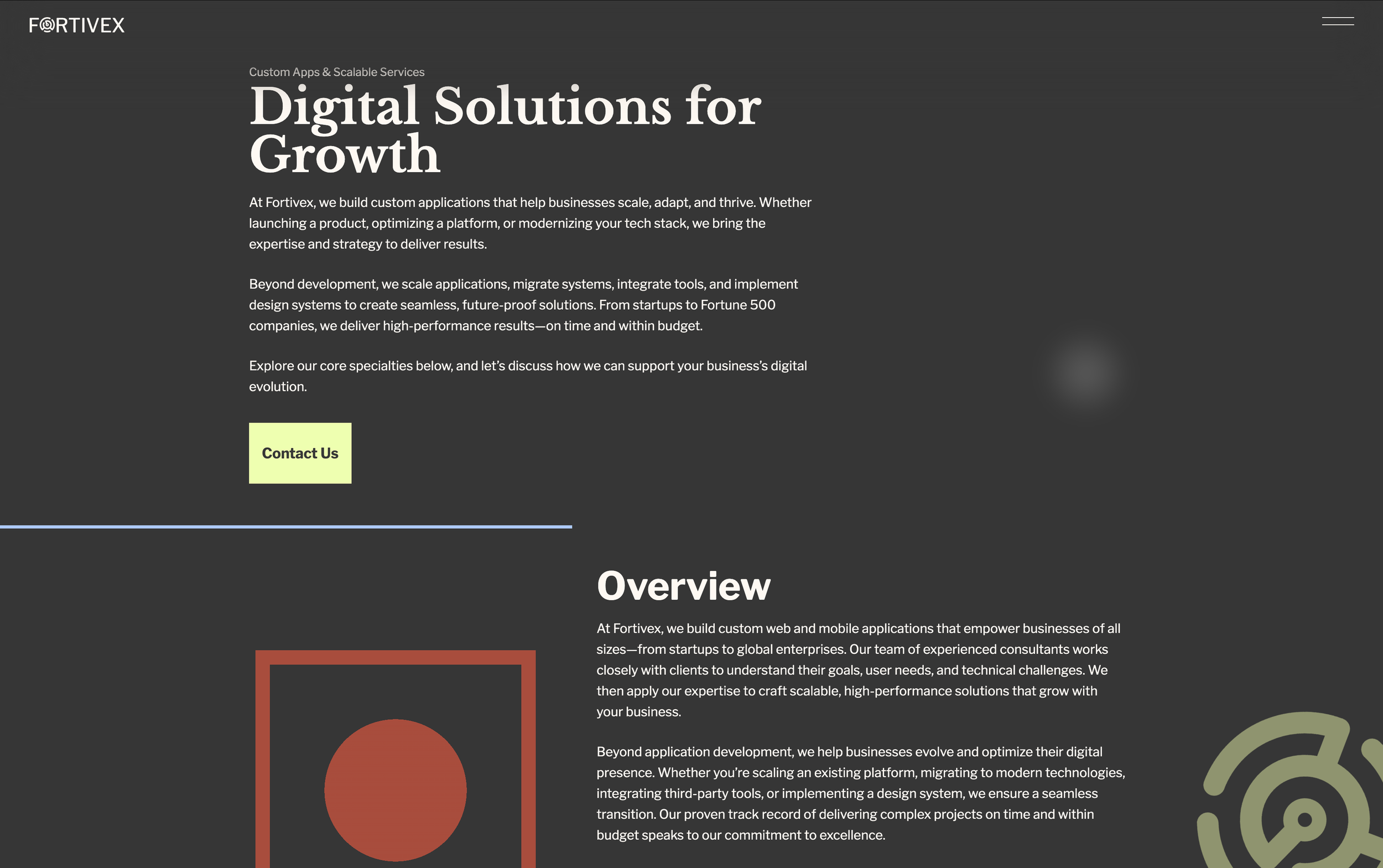
This is the overall look and feel of the finished Fortivex website. Easy to read with subtle flourishes on the cursor and page scroll.
The Process
I knew going in that this wasn't about building something perfect. It was about building something real, professional, and flexible enough to grow.
We started with a conversation about what success looked like. Greg needed a site that could support business development immediately while leaving room to evolve as the company matured. That meant making smart choices about what to prioritize now and what to design for later.
Defining the Story
One of the first things I tackled was figuring out how to talk about Fortivex. Greg knew his business model and his differentiators, but there was no existing marketing language—no taglines, no boilerplate, no "about us" copy. Everything had to be written from scratch.
I wrote all the copy across the site, working to strike a balance between sounding confident and sounding human. Consultancies can easily slip into jargon or vague corporate speak, and I wanted to avoid both. The copy needed to feel approachable while still communicating technical credibility.
Each page was crafted with a specific audience in mind: the homepage for easy navigation, the services page for prospective clients, the careers page for contractors, and the partnerships page for technology vendors. Even though the brand was brand new, the voice needed to feel consistent and intentional.
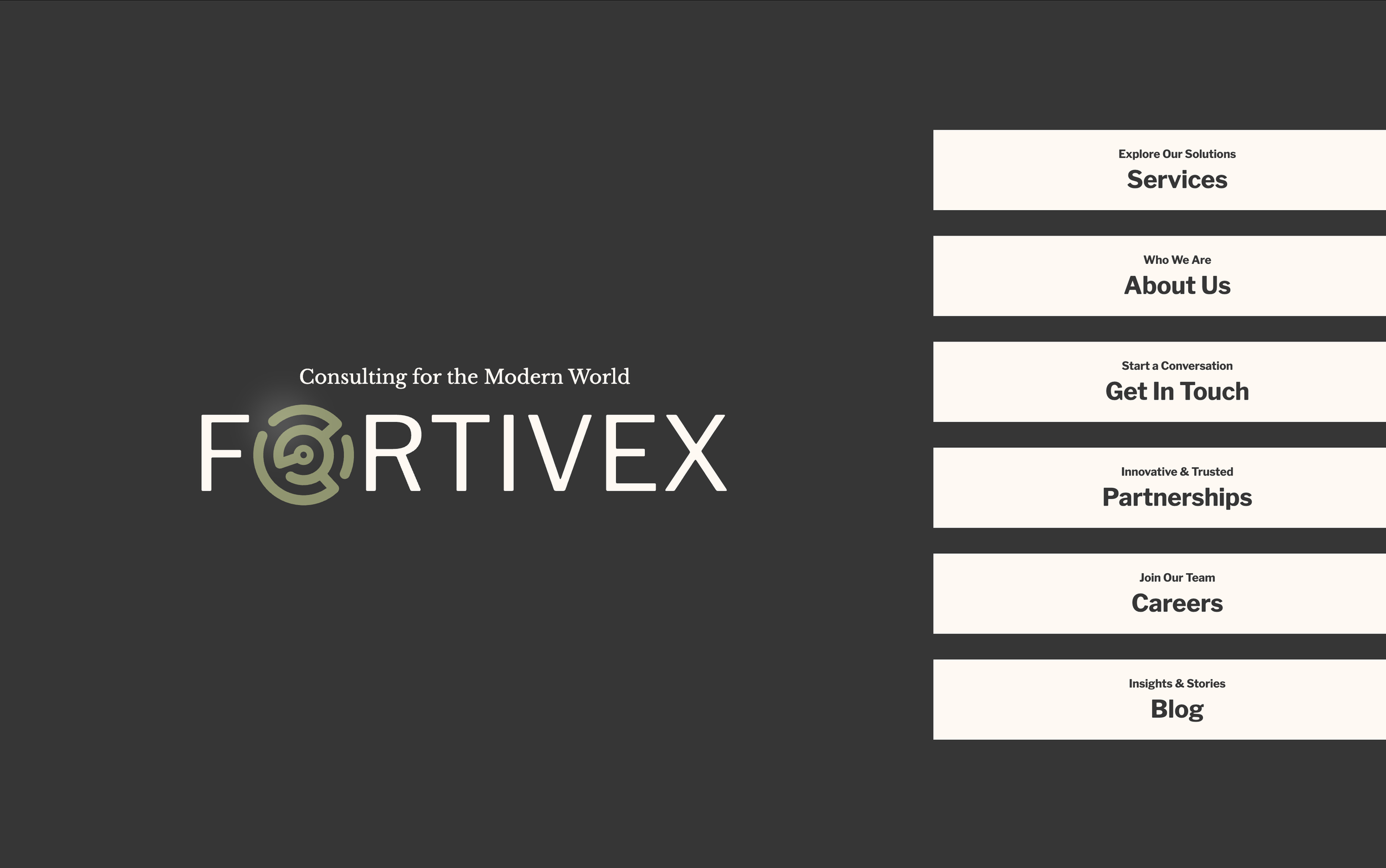
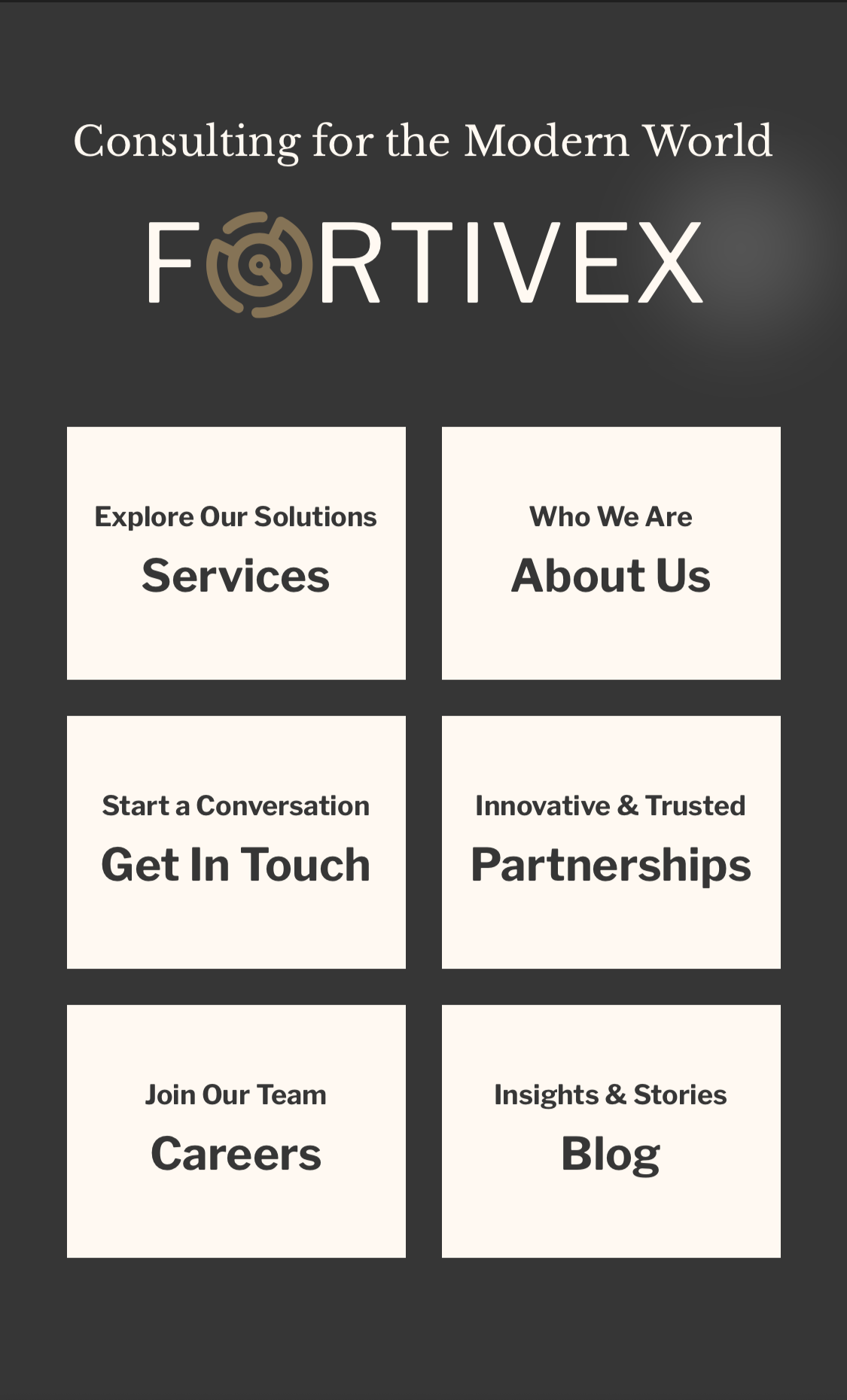
Fortivex’s homepage was designed to expedite finding the information relevant to the site visitor, sleek animations presented each option and a subtle rotation on the Fortivex logo used as the “o” in Fortivex introduced a running design consistency in the subpages. The mobile version catered to the smaller screensize, switching out longer navigation labels for easy to touch squares.
Screen recording of what the Fortivex landing page looks like as the page loads.
Designing without a Designer
Fortivex had a logo designed by an external designer, but beyond that, there was no design team or budget for custom photography or illustration. That constraint became an opportunity.
I built the site's visual identity from the ground up, drawing inspiration from Bauhaus design principles—minimal, functional, yet beautiful. Using typography, color, and layout, I created a distinct feel that balanced form and purpose. Rather than relying on stock images, I used custom CSS shapes and subtle motion elements that respond to user interaction—things like scroll behavior, page transitions, and hover states. These details give the site personality without feeling gimmicky.
Accessibility was non-negotiable. Every visual and interactive element was built to meet WCAG standards, and performance was optimized to support both user experience and search visibility.

Chosen color palette for Fortivex.com, leaning heavily on neutrals for readability and allowing pops of color slightly deviating from primary colors to keep things interesting but not distracting.
Recording of navigating through a page of Fortivex’s website - demonstrating the animations and structure.
Building for Flexibility
The site was built using Next.js and React, which gave us a fast, modern foundation that could scale as the company grows. For styling, I used Tailwind CSS to keep the design system consistent and maintainable.
One of the most important decisions was integrating Storyblok, a headless CMS, early in the process. Storyblok is one of Fortivex's technology partners, so using it served a dual purpose: it gave Greg the ability to update content without needing a developer, and it demonstrated the platform's capabilities to potential clients.
At the time, Storyblok wasn't fully compatible with the newest version of Next.js, so I had to build custom solutions to make the integration work seamlessly. That extra effort paid off—Greg could manage the entire site through the CMS, including creating new pages, updating copy, and publishing blog posts, all without touching code.
I also set up multilingual support right from the start, launching with English, Spanish, and Italian. This wasn't just a nice-to-have—it was core to how Fortivex planned to operate globally from day one.
Technologies Used
Next.js & React — Core framework for building a fast, scalable site
Tailwind CSS — Utility-first styling for consistent, responsive design
Storyblok — Headless CMS for flexible content management
Vercel — Hosting and deployment for performance optimization
Framer Motion — Subtle animations and interaction polish
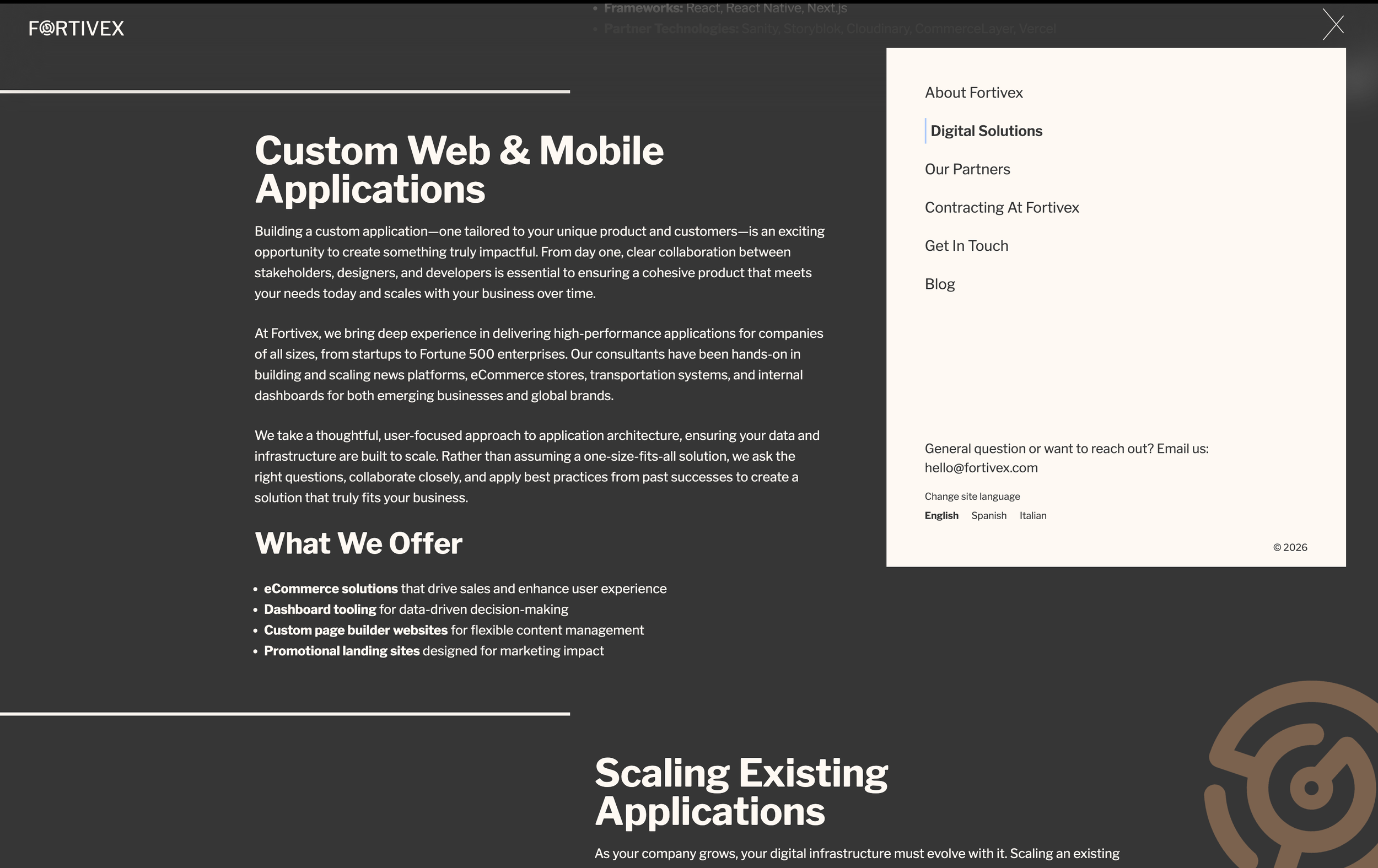
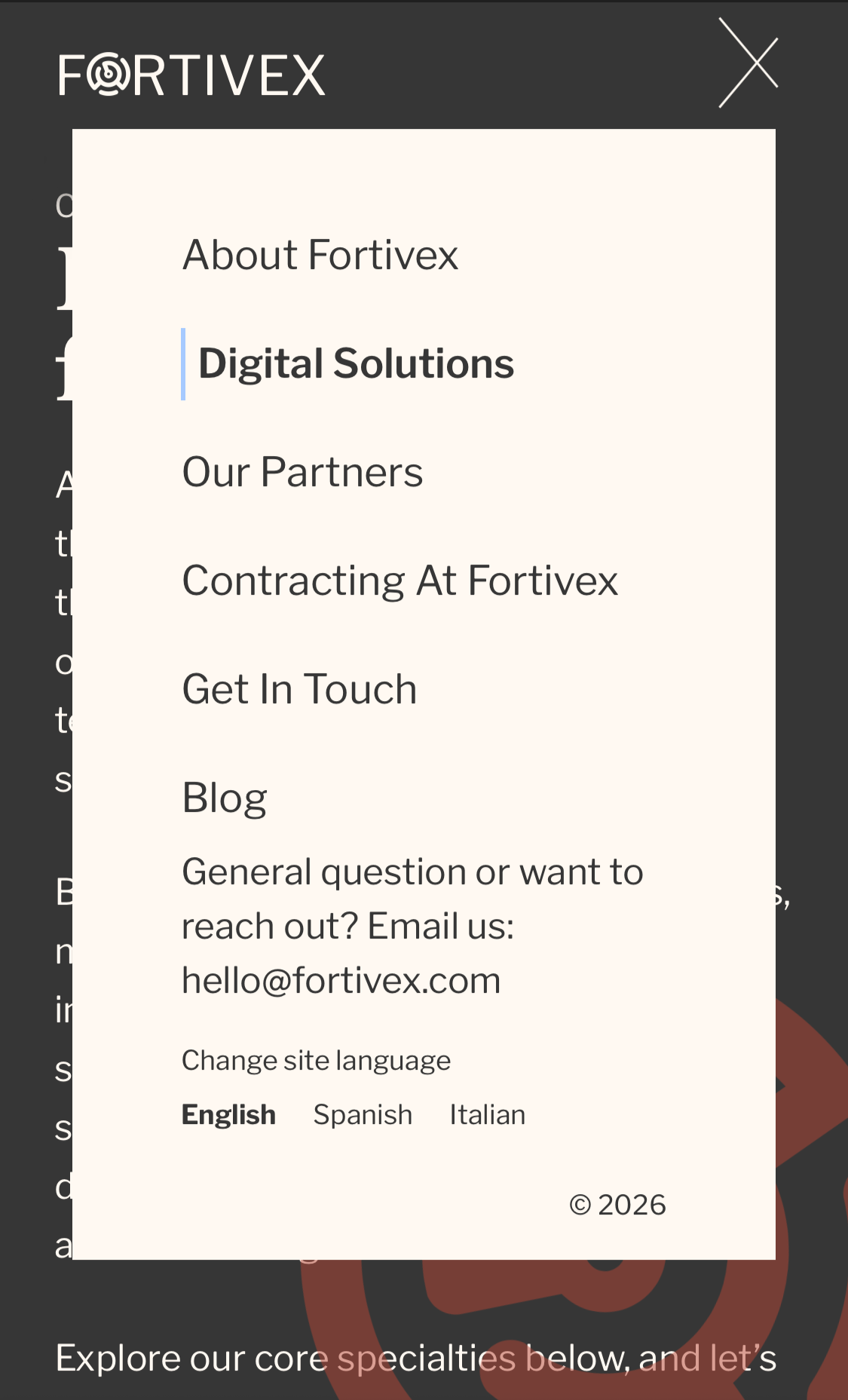
Menu navigation for Fortivex was another way to subtly add to the design of the site without interferring with usability. Here you can see the difference between desktop and mobile navigation views - including an easy way to email Fortivex - which is the main reason anyone would be coming to the site!
Launching and Iterating
The site launched with everything Fortivex needed to start operating: a clear homepage, detailed service and partnership pages, a careers section, and a fully functional blog. But it didn't stop there.
After launch, I continued refining the structure and navigation, making adjustments based on how the content was actually being used. I separated content more clearly, improved page composition, and started building toward a reusable design system that could support future iterations.
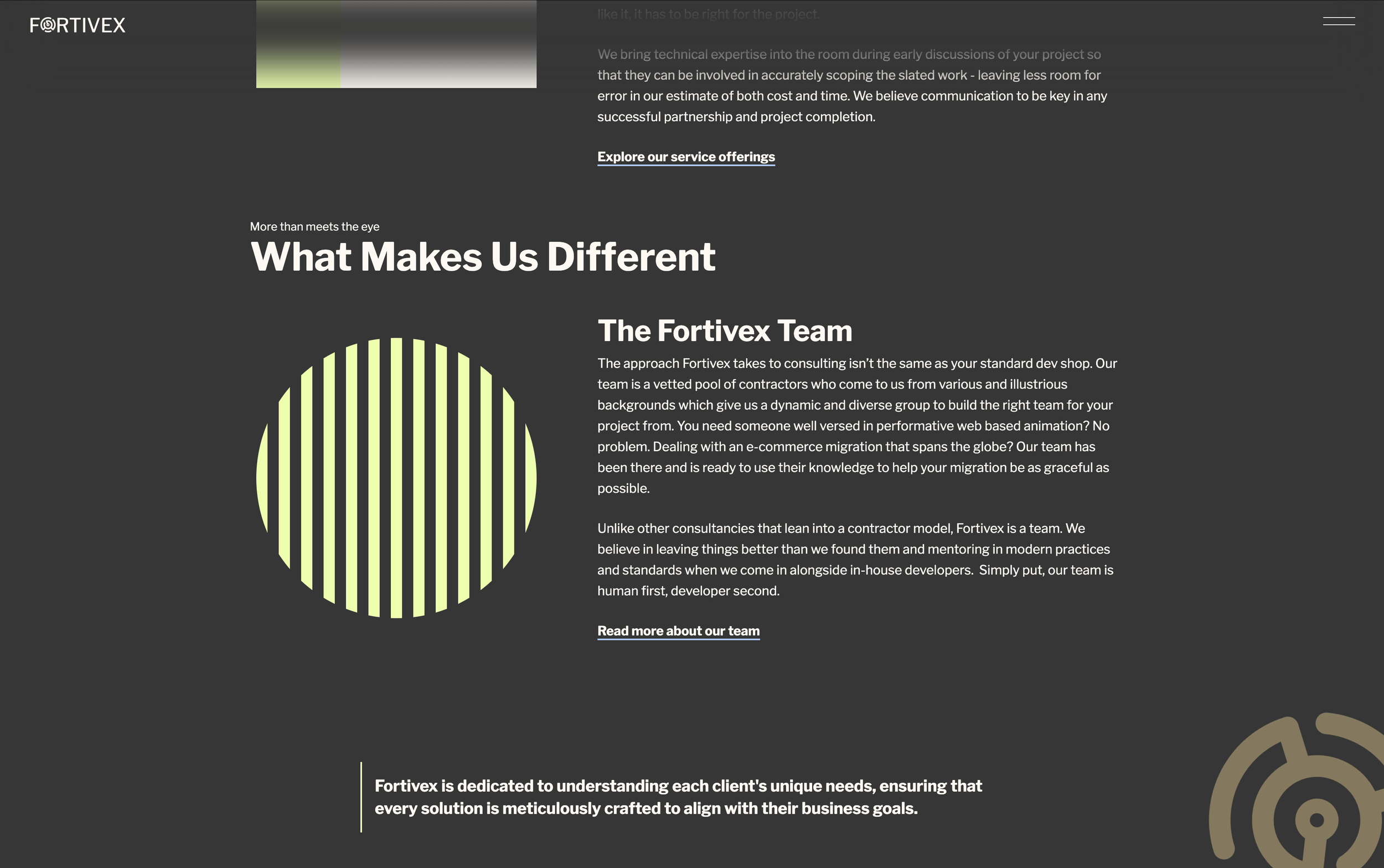
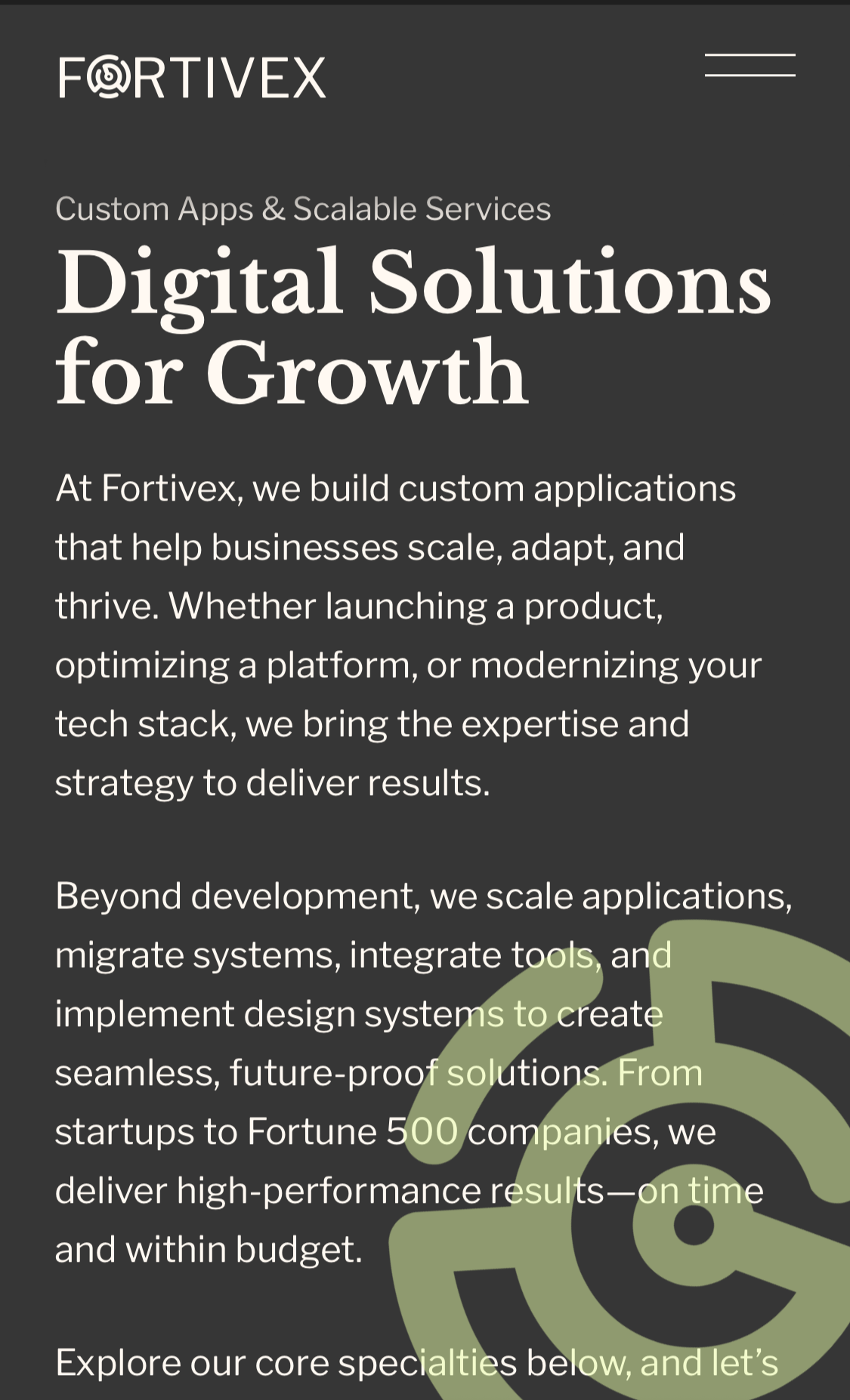
Examples of what pages looked like on Fortivex.com on both desktop and mobile screen sizes.
The Outcome
Fortivex went live with a professional, credible web presence that immediately unblocked business development. The site gave Greg something to share in conversations, something to point partners toward, and something that positioned the consultancy as thoughtful and capable.
More importantly, the site was built to last. Greg can manage and update everything himself through the CMS. The structure is flexible enough to grow alongside the business. And the technical foundation is strong enough to support whatever comes next.
What started as "we need a website" became a functional marketing tool, a portfolio signal, and a foundation for ongoing growth—all delivered in about two months.
Fortivex needed more than a website—they needed a foundation. I'm proud to have built something that not only met their immediate needs but set them up for whatever comes next.